When signing a multifunction printer repair contract, scrutinize service coverage details including parts replacement, labor costs, and preventative maintenance schedules. Verify response time guarantees, understand how they’re measured, and confirm technician qualifications. Examine escalation procedures for unresolved issues, review contract termination terms, and request documentation of all services performed. Understanding billing structures and hidden clauses for replacement parts prevents unexpected budget disruptions. These critical questions secure thorough protection while maximizing equipment lifespan and operational efficiency.
Expert Highlights
- What specific parts, consumables, and labor are covered versus excluded in the service agreement?
- What are the guaranteed response times for different problem severity levels and what happens if these aren’t met?
- What certifications and experience do technicians have with your specific printer models?
- How are service issues escalated if not resolved promptly, and what tracking systems monitor repair progress?
- How is billing structured for services beyond standard repairs, and what are the contract termination conditions?
What Exactly Is Included in the Service Coverage?
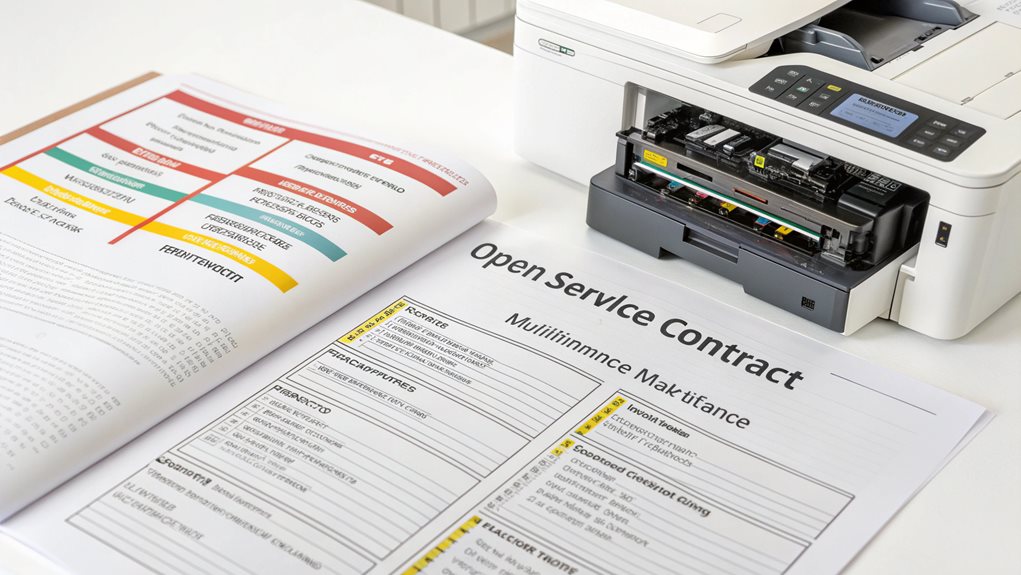
When signing a printer repair contract, understanding what is specifically covered under service provisions can mean the difference between unexpected costs and thorough protection. Most standard contracts include parts replacement, labor, and preventative maintenance, but critical details often hide in the fine print.
Businesses should request explicit confirmation about whether consumables like toner and paper are included, if remote technical support is available during all business hours, and whether software updates are covered alongside hardware repairs. Pay particular attention to emergency response times and potential exclusions for damage caused by operator error. Many organizations discover too late that their contract only covers specific components or has usage limitations.
The most thorough contracts clearly outline every covered service, excluded item, and additional fee possibility, allowing teams to anticipate true maintenance costs rather than facing surprise expenses.
How Are Response Times Guaranteed and Measured?

Response times in printer repair contracts should be clearly defined with specific metrics, such as “four-hour on-site response” or “next business day service,” rather than vague promises. Service Level Agreements (SLAs) should outline penalties or compensation when response targets are missed, providing tangible guarantees that protect your business operations. Understanding the escalation procedures—who to contact when initial responses are inadequate and how issues are elevated to higher support tiers—ensures you won’t be left waiting when critical printing capabilities are compromised.
Response Time Definitions
How precisely a vendor defines and measures response time can dramatically impact your service experience when equipment fails. Organizations should clarify exactly what the vendor means by “response time” to avoid misaligned expectations during critical printer outages. Understanding these nuances helps prevent productivity losses while ensuring appropriate accountability.
When reviewing response time definitions in your contract, consider:
- Does “response time” mean initial contact, remote diagnosis, or on-site arrival?
- Are response times measured in business hours or clock hours?
- How are holidays, weekends, and after-hours requests calculated?
- Do different severity levels receive different guaranteed response times?
Without clearly defined terms, your team may expect a technician within four hours while the vendor only promised a phone call in that timeframe—leaving your operations stalled longer than anticipated and creating unnecessary frustration.
Service Level Agreements
Beyond understanding response time definitions, organizations must formalize these expectations through structured Service Level Agreements (SLAs). These contracts explicitly outline what happens when service providers fail to meet promised response times, providing measurable accountability and recourse.
| SLA Component | What to Look For | Potential Red Flags |
|---|---|---|
| Response Time Guarantee | Clear timeframes by priority level | Vague language like “best effort” |
| Resolution Time Metrics | Maximum repair duration commitments | No specific resolution timeframes |
| Penalty Structure | Financial credits for missed targets | Minimal or no compensation |
| Reporting Methods | Regular performance documentation | No transparency in measurement |
When reviewing SLAs, make sure they specify how response times are tracked—whether through automated ticketing systems or manual verification processes. Companies should request historical SLA performance data from potential vendors to verify their track record before signing any agreement.
Escalation Procedures
Effective escalation procedures form the backbone of any reliable printer repair contract, ensuring issues don’t languish unresolved when standard service channels fall short. When negotiating terms, organizations should clarify exactly how service providers handle problems that exceed normal resolution timeframes. This prevents the frustration of watching critical equipment remain offline while business operations suffer.
When reviewing escalation procedures, consider these essential questions:
- Who are the designated contacts at each escalation level, from technicians to management?
- What specific response times are guaranteed for each severity level of malfunction?
- How will the provider communicate progress updates during extended repair situations?
- What compensation or remedies are available when escalation protocols fail to resolve issues?
Understanding these procedures beforehand creates confidence that when inevitable printer problems occur, there’s a clear, dependable path to resolution.
What Qualifications Do Your Service Technicians Possess?
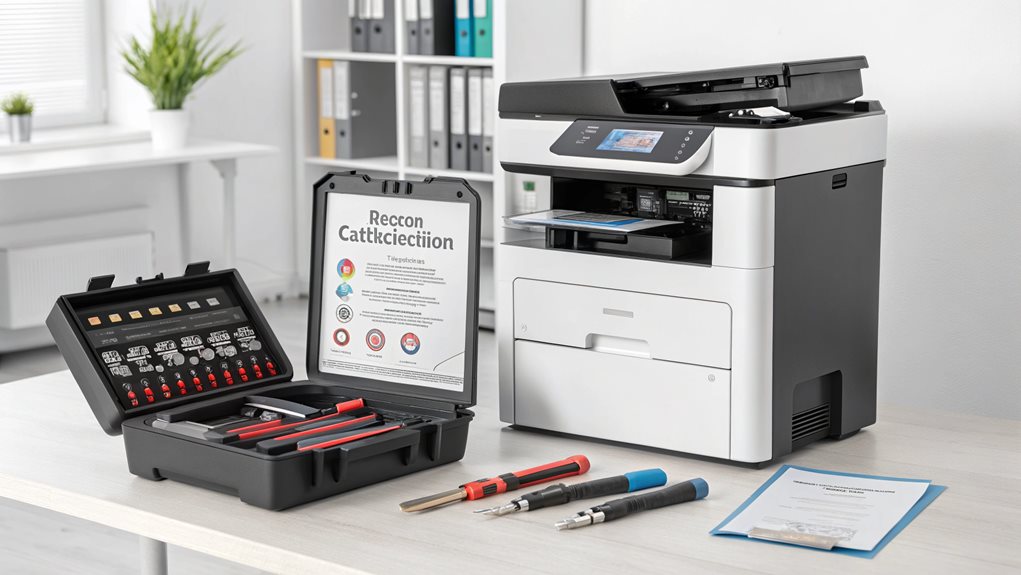
The technical qualifications of printer repair personnel directly impact service quality and should include industry-recognized certifications from manufacturers like HP, Canon, or Xerox. Service providers should maintain exhaustive records of each technician’s specialized experience with specific printer models, allowing clients to verify expertise before technicians arrive on-site. Response time guarantees become meaningful only when backed by technicians who possess both the training to diagnose issues quickly and the practical experience to implement effective solutions.
Training and Certification
When evaluating potential printer repair services, asking about technician qualifications can reveal essential differences between providers. Companies that invest in thorough training and industry certifications typically deliver superior service and troubleshooting capabilities that protect your investment.
Inquire specifically about:
- Manufacturer-specific certifications from brands like HP, Canon, Xerox, and Ricoh that guarantee technicians understand proprietary systems
- Industry standard certifications such as CompTIA A+ or specialized printer repair credentials
- Ongoing education requirements that keep technicians current with evolving technology
- Years of hands-on experience with your specific printer models and common issues
These qualifications directly impact downtime duration, repair quality, and equipment longevity. Well-trained technicians diagnose problems more accurately, complete repairs faster, and can advise on preventative maintenance that extends your equipment’s operational life—ultimately saving your organization both time and money.
Response Time Guarantees
Understanding response time guarantees provides another dimension for evaluating service providers beyond technician qualifications. When business operations depend on functioning equipment, knowing exactly how quickly a technician will arrive after reporting an issue becomes essential. Organizations should clarify whether the contract specifies response times in hours or business days, and whether these timeframes vary based on issue severity.
Many contracts promise “next business day” service, which could mean a 24-hour wait during weekdays but considerably longer over weekends. The most extensive agreements outline specific response windows for different problem categories—immediate response for system-down situations versus longer windows for minor issues. Companies should also verify if response time means initial contact or on-site arrival, and whether the contract includes penalties or credits when guaranteed response times aren’t met.
Specialized Experience Records
How thoroughly has a service provider documented their technicians’ specialized experience with your specific printer models? This often-overlooked detail can greatly impact service quality and equipment longevity. When evaluating potential service providers, request extensive documentation of their technicians’ qualifications to verify they possess the expertise needed for your specific equipment.
- Manufacturer-specific certifications that verify formal training on your exact printer models
- Detailed service histories showing experience resolving complex issues with similar equipment
- Technical continuing education records demonstrating commitment to staying current with evolving technologies
- Duration of experience with enterprise-level equipment, particularly for specialized functions like secure printing or high-volume production
Companies with well-documented specialized experience typically provide faster diagnoses, more effective repairs, and can recommend appropriate preventive maintenance schedules based on your usage patterns, ultimately extending your equipment’s operational lifespan.
Are Replacement Parts Included in the Contract Price?
Why do printer repair contracts often contain hidden costs that surprise businesses when parts need replacement? Many standard service agreements cover labor but exclude critical components like printheads, fusers, and transfer belts—items that frequently require replacement during a printer’s lifecycle. These exclusions can lead to unexpected expenses that quickly exceed the original contract value.
When evaluating printer repair contracts, organizations should carefully review the parts coverage section. Look for language specifying which components are included and which require additional payment. The most thorough contracts include all replacement parts, while less expensive options may utilize a tiered approach. Companies should request a detailed list of commonly replaced parts for their specific printer models and confirm whether these items fall under contract coverage or represent additional costs. This transparency prevents budget disruptions when repairs become necessary.
What Is Your Escalation Process for Unresolved Issues?
A robust escalation process guarantees printer repair issues don’t languish unresolved, potentially costing your business valuable productivity. Your contract should clearly outline specific timeframes for problem resolution, including guaranteed response times for different severity levels and automatic triggers for managerial involvement when technicians can’t resolve issues promptly. Additionally, verify that the service provider utilizes a thorough tracking system that documents each step of the troubleshooting process, allowing you to monitor repair status and establish accountability for persistent problems.
Resolution Timeframe Guarantees
When printer downtime escalates from an inconvenience to a serious business disruption, the resolution timeframe assurances in your service contract become critically important. These assurances establish clear expectations for how quickly your repair provider must respond to and resolve different types of issues, protecting your organization from extended productivity losses.
Before signing any printer repair contract, organizations should inquire about:
- Specific response time commitments for different severity levels (emergency vs. routine)
- Written assurances for maximum resolution timeframes, not just initial response
- Financial remedies or service credits if timeframes aren’t met
- Exclusions or limitations that might void these assurances
Understanding these timeframe assurances helps your team make informed decisions about service providers and guarantees everyone knows exactly what level of support to expect when problems arise, ultimately minimizing disruption to your operations.
Managerial Intervention Protocol
While resolution timeframes establish expected service completion deadlines, even the most thorough contracts require a backup plan for when initial repair attempts fail to resolve the issue. Organizations should inquire about the vendor’s formal escalation process, which details how unresolved problems move up the management chain for intervention. A well-defined protocol specifies exactly who to contact when frontline technicians cannot fix persistent problems, including names and direct contact information for supervisors and executives authorized to make decisions.
Ask questions like: “Who specifically will handle our case if the initial technician cannot resolve the issue?” and “What is your timeline for managerial involvement?” Companies with documented escalation procedures demonstrate accountability and reduce the frustration of being trapped in service limbo. This protocol transforms potentially damaging downtime into manageable situations with clear paths to resolution.
Problem Tracking System
How printer repair issues are tracked and documented reveals much about a service provider’s operational maturity. When evaluating potential contractors, inquire about their problem management systems that track service history across your printer fleet. A robust tracking system guarantees recurring issues aren’t treated as isolated incidents and provides valuable data for preventive maintenance.
Ask potential service providers about:
- How they document each service call, including diagnosis, parts replaced, and resolution steps
- Whether customers receive access to a portal showing repair history and open tickets
- Their method for identifying patterns across multiple service requests
- What metrics they track to measure service quality and response effectiveness
Understanding these tracking capabilities helps organizations assess whether a provider can deliver consistent, data-driven service rather than responding reactively to each breakdown without institutional memory of previous interventions.
How Does the Billing Structure Work for Additional Services?
Understanding the billing structure for additional services beyond standard printer repair represents a critical aspect of contract negotiation that many organizations overlook. When unexpected costs emerge, teams can face budget constraints that might have been avoided through proper foresight.
Companies should request detailed breakdowns of charges for services like firmware updates, security patches, and emergency after-hours support. Pay particular attention to whether these services incur flat fees or hourly rates. Additionally, clarify if the provider charges travel time for on-site visits and determine if consumables like maintenance kits are included in the contract or billed separately.
The most effective approach involves creating a spreadsheet comparing potential additional charges across multiple vendors, enabling organizations to calculate the true total cost of ownership rather than focusing solely on the base monthly fee.
What Are the Contract Termination Terms and Penalties?
Precisely when organizations plan to exit a printer repair agreement, they often discover hidden termination clauses that greatly impact their bottom line. Understanding these terms before signing can prevent unexpected financial strain and preserve valuable business relationships with service providers.
Hidden termination clauses in printer agreements can devastate your budget if discovered too late. Review before signing to protect your finances.
When reviewing termination conditions, organizations should specifically inquire about:
- Early termination fees and whether they decrease over the contract duration
- Required notification periods, which typically range from 30-90 days before intended cancellation
- Auto-renewal clauses that might lock in service for additional terms without explicit consent
- Conditions under which either party may terminate without penalty, such as consistent service failures
Careful examination of these elements allows businesses to maintain flexibility while ensuring accountability from their service provider. Most importantly, it positions the organization to negotiate more favorable terms before committing to a potentially restrictive agreement.
How Do You Handle Preventive Maintenance Scheduling?
Proactively scheduled maintenance represents the cornerstone of any effective printer repair contract, yet many organizations overlook vital details about how these essential services are actually implemented. Companies should inquire about specific maintenance frequency, confirming whether the vendor follows manufacturer recommendations or employs a standardized schedule across all equipment. Ask whether preventive maintenance visits are automatically scheduled or require customer initiation, as this difference considerably impacts equipment longevity.
Another important consideration is how maintenance disrupts daily operations. Determine if technicians can perform maintenance during off-hours to minimize workflow interruptions. Request documentation of all preventive maintenance performed, including parts replaced and performance metrics measured. Understanding these details helps organizations guarantee they receive the thorough care promised in their service agreement, ultimately extending equipment lifespan and reducing costly emergency repairs that occur when preventive maintenance falls short.
What Reporting and Documentation Will You Provide?
Why thorough documentation matters when establishing a printer repair contract can often be overlooked by organizations until problems arise. Extensive reporting provides visibility into device performance, repair history, and maintenance schedules, allowing organizations to make informed decisions about their printing infrastructure while holding service providers accountable.
Documentation isn’t just paperwork—it’s the backbone of accountability in your printer service relationship.
When discussing documentation requirements with potential service providers, organizations should request:
- Detailed service reports for each maintenance visit or repair call, including parts replaced, technician notes, and time spent
- Regular fleet performance analytics showing uptime percentages, frequently occurring issues, and usage patterns
- Cost analysis reports that track expenses across devices to identify underperforming units
- Customizable documentation options that align with internal reporting requirements and compliance needs
These reporting mechanisms create transparency between the service provider and the organization, establishing clear expectations for both parties and facilitating productive long-term partnerships.
Is Remote Diagnostics Support Available Between Service Calls?
Beyond thorough reporting, organizations should consider whether potential service providers offer remote diagnostic capabilities that can noticeably reduce printer downtime.
Modern service providers can often connect to printing equipment remotely, identifying issues before they become critical failures. This proactive approach allows technicians to monitor toner levels, diagnose error codes, and even implement software fixes without an on-site visit. When evaluating contracts, ask specifically about the provider’s remote monitoring infrastructure and response protocols—will they automatically dispatch technicians when remote diagnostics detect an impending failure? Companies should also inquire about security protocols protecting these remote connections, ensuring they meet internal compliance requirements. The best providers offer dashboard access where clients can view their equipment status in real-time, creating transparency that builds confidence in the service relationship. Remote diagnostics ultimately translate to faster resolution times and fewer emergency service calls.
Frequently Asked Questions
How Long Have You Been Servicing This Specific Printer Model?
This inquiry assesses technician experience with the specific model. Customers should verify the service provider has substantial history maintaining that equipment, as experience correlates with efficient troubleshooting and repairs.
Can We Modify the Contract if Our Printing Volume Changes?
Yes, service providers typically allow contract modifications to accommodate changing print volumes. Members should request flexible terms with clear adjustment protocols and associated cost implications before signing.
What Is Your Technician-To-Client Ratio in Our Service Area?
The technician-to-client ratio indicates service availability and response times. Companies should inquire about local coverage to guarantee adequate support when equipment issues arise, maintaining business continuity and staff productivity.
Do You Provide Loaner Equipment During Extended Repairs?
Inquiring about loaner equipment availability during extended repairs guarantees business continuity. Top-tier service providers typically offer temporary replacements, maintaining workflow while permanent equipment undergoes maintenance. This provision should be clearly outlined in the contract.
How Do You Handle Proprietary Software Updates and Licensing?
Reputable service providers include software updates and licensing management in their contracts, ensuring customers receive all manufacturer updates without hidden fees or compatibility issues.
Expert Final Thoughts
Asking these critical questions before signing a multifunction printer service contract can save organizations significant time and money. By understanding coverage details, response guarantees, technician qualifications, and termination terms, businesses protect themselves from unexpected costs and service gaps. A thorough evaluation process leads to partnerships with reliable service providers who deliver consistent equipment uptime, transparent reporting, and prompt issue resolution—ultimately supporting operational efficiency and productivity.