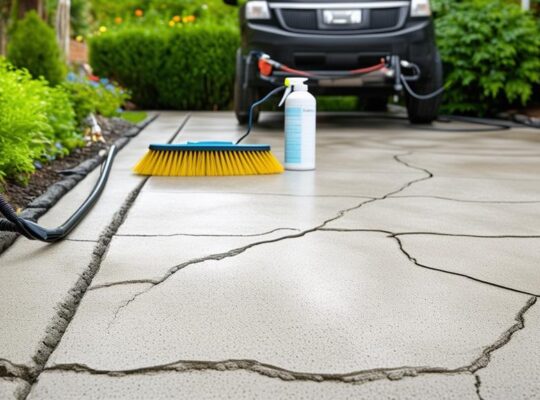
Concrete driveway repair and resurfacing options range from simple DIY fixes to extensive professional solutions, depending on damage severity. Common issues include surface scaling, spalling, cracking, and settling, with repair costs varying from $200-800 for minor fixes to $10,000 for complete replacement. DIY methods typically address hairline cracks and surface scaling, while professionals employ techniques like slab jacking, chemical grouting, and diamond grinding. Understanding the full scope of options helps property owners make informed decisions about preservation versus replacement.
Expert Highlights
- Surface scaling and spalling can be fixed using concrete resurfacers, which restore the surface appearance and protect against further damage.
- Professional slab jacking and chemical grouting effectively repair sunken areas and deep cracks in concrete driveways.
- Minor cracks under 1/8 inch can be repaired using DIY methods with concrete crack fillers or epoxy-based sealants.
- Concrete resurfacing costs between $3-$10 per square foot, while complete replacement ranges from $8-$15 per square foot.
- Choose replacement over repairs when damage exceeds 1/4 inch cracks, shows multiple connected cracks, or repair costs exceed 50% of replacement.
Common Types of Concrete Driveway Damage

Concrete driveways, despite their durability, can develop several distinct types of damage over time through exposure to weather, heavy loads, and chemical agents.
Common issues include surface scaling, where the top layer flakes away due to freeze-thaw cycles and deicing chemicals, and spalling, characterized by pitting and concrete deterioration.
Cracking represents another significant form of damage, manifesting as hairline fissures, structural cracks extending deeper into the concrete, or pattern cracking that creates a network of interconnected lines.
Joint deterioration frequently occurs where separate concrete sections meet, while settling or sinking can result from poor base preparation or soil erosion beneath the driveway.
Additionally, discoloration and staining may develop from oil leaks, rust, or organic materials, while surface wear patterns can emerge in high-traffic areas where vehicles regularly traverse the concrete.
With proper maintenance and regular inspections, homeowners can identify and address these issues before they become severe problems requiring complete replacement.
Professional Assessment and Inspection
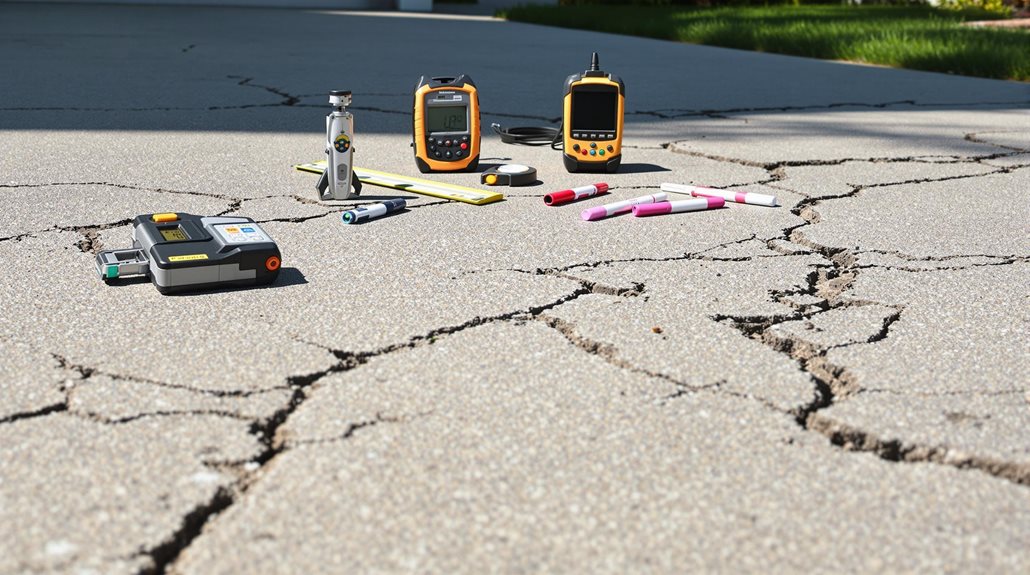
Before undertaking any concrete driveway repairs, professional assessment and inspection prove essential for determining the full scope of damage, underlying causes, and most appropriate remediation strategies.
During inspection, concrete specialists utilize specialized equipment, including moisture meters, crack monitors, and thermal imaging devices, to evaluate surface integrity, subsurface conditions, and structural stability. These tools help identify issues such as delamination, reinforcement corrosion, and deep-seated structural problems that may not be visible to the untrained eye.
Advanced diagnostic tools reveal hidden structural issues that could compromise driveway integrity if left undetected during professional inspection.
The assessment process typically includes core sampling, load-bearing capacity tests, and detailed documentation of crack patterns, spalling locations, and drainage issues.
Professional evaluators also consider environmental factors, soil conditions, and historical repair data to develop thorough repair recommendations that address both immediate concerns and long-term durability requirements.
With proven excellence in concrete solutions, Legacy General Services delivers comprehensive inspections for both residential driveways and commercial slabs.
DIY Repair Methods and Materials

While professional assessments provide thorough evaluations, homeowners can address minor to moderate concrete driveway damage through various do-it-yourself repair methods, utilizing widely available materials and tools from home improvement retailers.
For hairline cracks under 1/4 inch, concrete crack fillers or epoxy-based sealants provide effective solutions, requiring minimal preparation beyond thorough cleaning and debris removal.
Medium-sized cracks and spalls benefit from patching compounds or resurfacing products, which can be applied using basic tools such as trowels and squeegees.
Surface scaling and minor pitting can be remedied through the application of concrete resurfacers, which bond to existing concrete and create a fresh, durable top layer.
These products typically require mixing with water, proper surface preparation, and application during appropriate weather conditions for ideal results.
With proper maintenance techniques, concrete surfaces can maintain their structural integrity for up to 30 years when repairs are addressed promptly.
Professional Repair Techniques
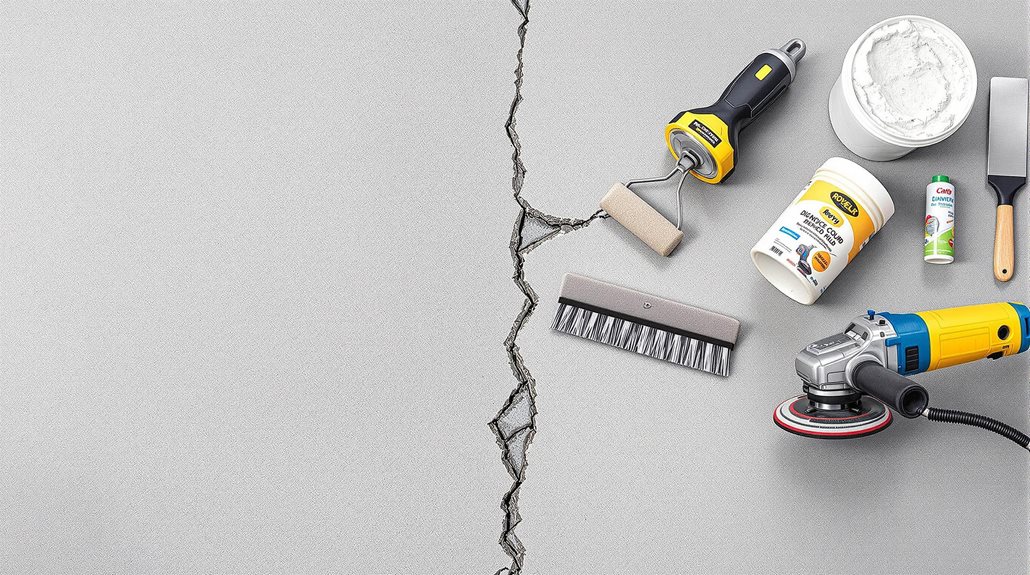
Professional contractors employ numerous specialized techniques and equipment to address severe concrete driveway deterioration, utilizing methods that extend far beyond basic patching and filling.
These advanced repair procedures guarantee long-lasting solutions while maintaining structural integrity.
- Slab jacking – Involves pumping specialized grout mixture beneath sunken concrete sections to restore proper elevation and stabilize the foundation.
- Chemical grouting – Uses polyurethane-based materials to fill voids and seal cracks through pressure injection systems.
- Diamond grinding – Employs industrial grinding equipment to level uneven surfaces and remove surface imperfections.
- Epoxy injection – Implements high-pressure systems to force structural epoxy into deep cracks, creating permanent molecular bonds.
These professional techniques require sophisticated equipment, extensive training, and precise application methods to achieve ideal results.
Contractors carefully evaluate each situation to determine which approach will provide the most effective, durable solution.
Resurfacing Options and Applications
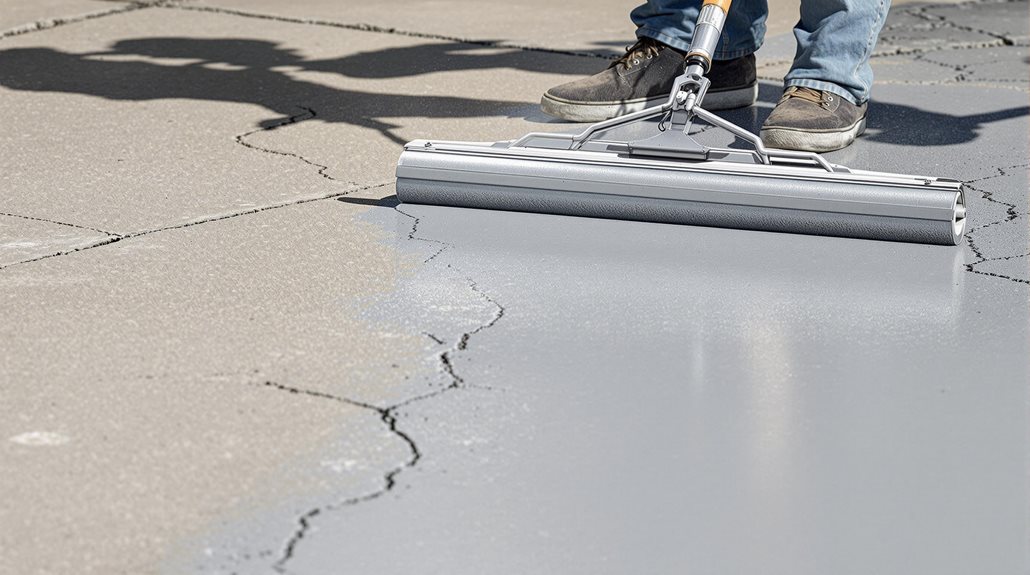
Several resurfacing options provide transformative solutions for worn or damaged concrete driveways, offering more extensive coverage than spot repairs while being less invasive than full replacement.
| Resurfacing Method | Applications & Benefits |
|---|---|
| Concrete Overlay | 1/4 to 1/2 inch thickness, ideal for minor surface damage |
| Microtopping | Ultra-thin layer, perfect for cosmetic enhancement |
| Stamped Overlay | Decorative patterns, mimics brick or stone |
| Self-Leveling | Smooths uneven surfaces, 1/2 to 1-inch coverage |
Modern resurfacing compounds contain polymer-modified cement materials that create exceptional bonding characteristics with existing concrete surfaces. These advanced formulations, when properly applied in temperatures between 50-85°F, can extend driveway life by 10-15 years while providing enhanced resistance to freeze-thaw cycles, chemical exposure, and daily wear patterns.
Cost Considerations for Repairs
Understanding the costs associated with concrete driveway repairs requires careful consideration of multiple factors, including the repair method selected, extent of damage, local labor rates, and necessary materials.
Accurate cost assessment for driveway repairs demands evaluation of repair type, damage severity, workforce costs, and material requirements.
Common repair costs typically align with the following price ranges:
- Minor crack filling and patching: $200-$800, depending on the number and size of repairs needed
- Concrete resurfacing: $3-$10 per square foot, with total costs ranging from $1,800-$5,000 for average driveways
- Full section replacement: $8-$15 per square foot, potentially reaching $10,000 for complete driveway replacement
- Decorative options and enhanced finishes: Additional $2-$4 per square foot above base repair costs
These estimates reflect national averages, and homeowners should obtain multiple local quotes.
Considering both immediate repair needs and long-term durability when evaluating cost-effectiveness is also important.
Preventive Maintenance Strategies
Regular preventive maintenance of concrete driveways can extend their lifespan by 10-15 years while minimizing the need for costly repairs.
Homeowners should implement a thorough maintenance schedule that includes annual sealing, quarterly inspections, and prompt addressing of minor issues before they escalate.
Key preventive measures include applying a quality concrete sealer every 2-3 years, removing oil stains within 24 hours of occurrence, and maintaining proper drainage with a 1/8-inch per foot slope.
During winter months, using sand or cat litter instead of harsh chemical de-icers helps preserve the concrete’s integrity.
Professional inspections should focus on identifying hairline cracks, spalling, and joint deterioration.
These issues, when detected early, can be addressed with simple repairs such as crack filling or partial resurfacing, preventing the need for complete driveway replacement.
When to Replace vs. Repair Your Driveway
Determining whether to repair or replace a concrete driveway requires careful evaluation of multiple factors, including a thorough assessment of existing damage patterns, crack severity, and overall structural integrity.
A detailed cost-benefit analysis must weigh the expense of repairs against full replacement costs, factoring in both immediate expenses and long-term maintenance implications over the driveway’s expected lifespan.
The decision ultimately hinges on safety considerations and functional requirements, as extensive deterioration, significant settlement issues, or compromised load-bearing capacity may necessitate complete replacement rather than temporary repairs.
Assess Damage and Cracks
When faced with a damaged concrete driveway, properly evaluating the extent and type of deterioration becomes essential for making an informed decision between repair and replacement.
A thorough assessment requires examining the driveway’s surface conditions, structural integrity, and underlying causes of damage. Homeowners and contractors should document and measure all visible defects while considering the driveway’s age and previous repairs.
- Hairline cracks (less than 1/8 inch wide) typically indicate normal settling or thermal expansion.
- Spider cracks and crazing patterns suggest improper curing or surface damage.
- Structural cracks (1/4 inch or wider) often point to serious foundation issues or soil problems.
- Spalling, scaling, and pitting reveal chemical damage or freeze-thaw cycle effects.
The severity, depth, and pattern of these issues determine whether localized repairs will suffice or if complete replacement is necessary.
Cost-Benefit Analysis
Making an informed decision between repairing or replacing a concrete driveway requires careful evaluation of both immediate and long-term financial implications. Homeowners must consider the extent of damage, age of the driveway, and projected maintenance costs when analyzing their options.
| Factor | Repair | Replace |
|---|---|---|
| Cost Range | $4-8/sq ft | $12-18/sq ft |
| Lifespan | 2-5 years | 25-30 years |
| Labor Time | 1-2 days | 5-7 days |
| ROI | 30-40% | 75-85% |
When the repair costs exceed 50% of replacement value, or when multiple significant issues exist simultaneously, replacement often proves more economical. Minor cracks and surface damage typically warrant repairs, while extensive deterioration, settling, or drainage problems generally indicate the need for complete replacement, despite higher upfront costs.
Safety and Function Impact
Safety concerns frequently determine whether a concrete driveway requires repairs or complete replacement, as deteriorating conditions can pose significant risks to vehicles and pedestrians.
The functional impact of damaged concrete extends beyond aesthetics, affecting property value and daily usability.
- Cracks exceeding 1/4 inch in width or showing vertical displacement create tripping hazards and require immediate attention.
- Surface spalling that exposes aggregate compromises traction, especially during wet conditions.
- Multiple connected cracks forming a pattern indicate structural issues that may warrant replacement.
- Settled or uneven sections creating drops greater than 1/2 inch pose risks to vehicle undercarriage.
When evaluating safety impacts, homeowners must consider both immediate hazards and long-term structural integrity, as minor issues can quickly escalate into major safety concerns requiring costly interventions.
Frequently Asked Questions
Can I Paint My Concrete Driveway to Match My House Color?
Homeowners can paint concrete driveways to match their house using specially formulated concrete paint or stain. It’s important to choose exterior-grade products designed specifically for concrete surfaces for lasting results.
How Long Should I Wait Before Parking on a Newly Repaired Driveway?
Homeowners should wait at least 7 days before parking on a newly repaired concrete driveway. Light foot traffic may be possible after 24 hours, but vehicles require complete curing time.
Will Homeowner’s Insurance Cover My Damaged Concrete Driveway?
Homeowner’s insurance typically covers driveway damage caused by sudden accidents or natural disasters, but excludes normal wear and tear, settling, or poor maintenance. Coverage details vary between policies.
Can Tree Roots Be Removed Without Damaging My Concrete Driveway?
Tree root removal beneath driveways requires professional expertise. Careful excavation, root cutting, and barrier installation can protect concrete while addressing the issue. Many homeowners successfully manage this common challenge.
Is It Safe to Use Rock Salt on a Concrete Driveway?
Rock salt can damage concrete by causing scaling and deterioration. Homeowners should consider pet-friendly and concrete-safe ice melt alternatives like calcium chloride or magnesium chloride instead.
Expert Final Thougts
Maintaining a concrete driveway requires regular assessment, timely repairs, and preventive care to maximize its lifespan and value. Whether choosing DIY methods for minor fixes or professional services for major repairs and resurfacing, property owners must carefully weigh costs against long-term benefits. Through proper maintenance and prompt attention to damage, most concrete driveways can provide decades of reliable service before requiring full replacement.