Freeze-thaw cycles crack standard concrete by forcing water expansion within the material, creating potholes and surface damage. Cold-climate driveways require air-entrained concrete with tiny air pockets that absorb water expansion without breaking. Proper drainage prevents water infiltration, while sealed surfaces block moisture penetration and de-icing salt damage. Installation on compacted, well-draining bases guarantees longevity. These specific material choices and preparation techniques transform vulnerable concrete into a durable winter surface. Understanding the full scope of these protective measures reveals how strategic planning eliminates costly repairs.
Expert Highlights
- Use air-entrained concrete with tiny air bubbles to allow water expansion during freeze-thaw cycles.
- Apply low water-to-cement ratios and chemical additives like silica fume to densify concrete.
- Install proper site grading, four-inch gravel base, and perforated drainage pipes for water management.
- Extend concrete curing periods and use proper finishing techniques to prevent ice buildup.
- Seal cracks seasonally, reseal every five to seven years, and minimize salt applications.
Understanding Freeze-Thaw Damage and Winter Deterioration
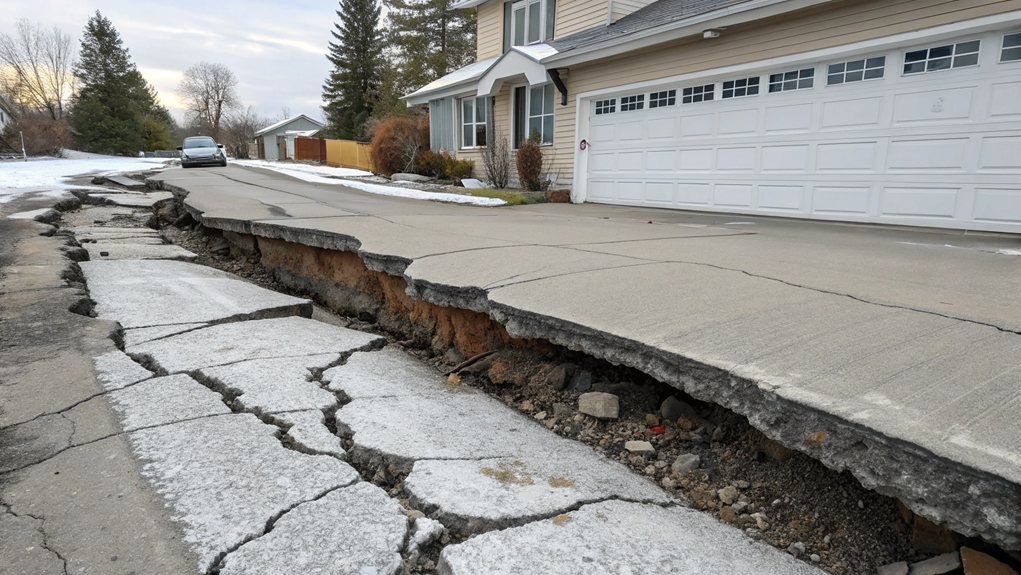
When water seeps into concrete and freezes during winter months, it expands with tremendous force—roughly 9 percent in volume—creating internal pressure that cracks and crumbles the surface from within, a destructive cycle known as freeze-thaw damage. This repeated freezing and thawing weakens the concrete’s structural integrity, eventually leading to potholes, surface spalling, and complete failure if left unaddressed.
The damage accelerates in climates experiencing frequent temperature fluctuations above and below freezing. Salt applications, common for de-icing, penetrate these micro-cracks and accelerate deterioration further. Property owners in cold regions must understand that preventing water infiltration represents the primary solution—accomplished through proper drainage, sealing, and air-entrainment techniques during construction. These preventative measures protect investments and extend driveway lifespan greatly.
Selecting Freeze-Resistant Concrete Materials and Additives

The concrete mixture itself determines whether a driveway will withstand freeze-thaw cycles or deteriorate rapidly, making material selection the foundation of cold-climate durability. Standard concrete lacks the air entrainment necessary to survive repeated freezing and thawing, resulting in cracking and surface spalling within seasons.
Builders should specify air-entrained concrete, which incorporates tiny, evenly distributed air bubbles that allow water expansion without damaging the paste structure. Additionally, selecting a low water-to-cement ratio—around 0.40 to 0.45—produces denser concrete that resists water penetration. Chemical additives like silica fume further enhance durability by densifying the concrete matrix.
These material choices work together to create driveways that remain intact through countless winter cycles, protecting your investment and ensuring reliable performance.
Proper Site Preparation and Drainage Design

Even with the most durable concrete mixture, poor site preparation and inadequate drainage will undermine a driveway’s performance in cold climates, allowing water to accumulate beneath the surface where freeze-thaw damage begins. Proper site grading directs water away from the driveway foundation, preventing pooling that leads to cracking and deterioration. Contractors should excavate subgrade material to establish a slight slope—typically one-quarter inch per foot—ensuring runoff moves toward drainage channels or landscaping. Installing a four-inch gravel base layer beneath the concrete provides essential water permeability, while perforated drainage pipes along the driveway’s edges channel groundwater safely away. These preparation steps protect against the damaging cycle of water infiltration, freezing, and expansion that compromises concrete integrity, ultimately extending driveway lifespan and reducing costly repairs.
Installation Techniques for Cold Climate Durability
Proper installation methods become the critical bridge between excellent site preparation and a durable, long-lasting concrete driveway in regions where temperatures regularly drop below freezing. Cold climates present unique challenges: freeze-thaw cycles crack concrete as trapped water expands and contracts repeatedly. Contractors address this through air entrainment, which involves adding tiny air bubbles throughout the mixture, creating space for water expansion without damaging the material. Additionally, professionals use low water-to-cement ratios and allow extended curing periods in controlled conditions, strengthening the concrete before harsh weather arrives. Proper finishing techniques, including creating textured surfaces for traction, prevent dangerous ice buildup. These installation strategies work together, transforming vulnerable concrete into resilient pavement capable of withstanding years of freeze-thaw punishment without deterioration.
Long-Term Maintenance and Seasonal Protection Strategies
Driveway maintenance in cold climates demands consistent attention throughout the year, as freeze-thaw cycles continue their destructive work long after installation completes. Water seeping into concrete cracks expands when frozen, widening damage and accelerating deterioration. Strategic seasonal protection prevents costly repairs.
| Season | Primary Task | Expected Benefit |
|---|---|---|
| Spring | Seal cracks and inspect | Prevents water infiltration |
| Summer | Deep cleaning and resealing | Extends surface life 5-7 years |
| Fall | Clear debris, apply protective coat | Prepares for winter stress |
| Winter | Remove snow carefully, limit salt | Minimizes freeze-thaw damage |
| Year-round | Monitor for new cracks | Early detection saves money |
Homeowners joining communities that prioritize preventative maintenance experience fewer emergency repairs, reduced expenses, and driveways lasting 25-30 years instead of 15-20 years.
Frequently Asked Questions
How Much Does Concrete Driveway Installation Typically Cost in Cold Climates?
Concrete driveway installation in cold climates typically costs between $8 to $18 per square foot, with total projects ranging from $3,200 to $7,200 for standard residential driveways, depending on local labor rates and site conditions.
What Is the Expected Lifespan of a Properly Constructed Cold-Climate Concrete Driveway?
A properly constructed cold-climate concrete driveway typically lasts 25-40 years. With regular maintenance, including seal coating and prompt crack repairs, homeowners can extend its lifespan considerably, joining others who’ve maximized their investment.
Can I Install a Concrete Driveway During Winter Months?
Installing concrete during winter months is not recommended. Freezing temperatures prevent proper curing and cause premature cracking. Concrete contractors typically avoid winter installation, waiting for warmer seasons when conditions support ideal driveway development and durability.
How Do I Compare Concrete Driveways to Asphalt in Freeze-Thaw Environments?
Concrete outperforms asphalt in freeze-thaw cycles due to superior durability and longevity. While asphalt requires frequent resealing and softens in heat, properly sealed concrete resists cracking and maintains structural integrity through harsh winters, making it the community’s preferred choice.
What Permits or Professional Certifications Are Required for Driveway Installation?
Building permits vary by jurisdiction and typically require licensed contractors. Most regions demand general contractor licensing, concrete certification, and adherence to local building codes. Professional qualifications guarantee quality installation within the driveway community standards.
Expert Final Thoughts
Building durable concrete driveways in cold climates requires strategic planning, from selecting freeze-resistant materials to implementing proper drainage systems. By addressing freeze-thaw damage through quality concrete additives, correct installation techniques, and consistent maintenance, homeowners can greatly prolong their driveway’s lifespan. Investing in these foundational measures prevents costly repairs and guarantees reliable performance through harsh winters for years to come.