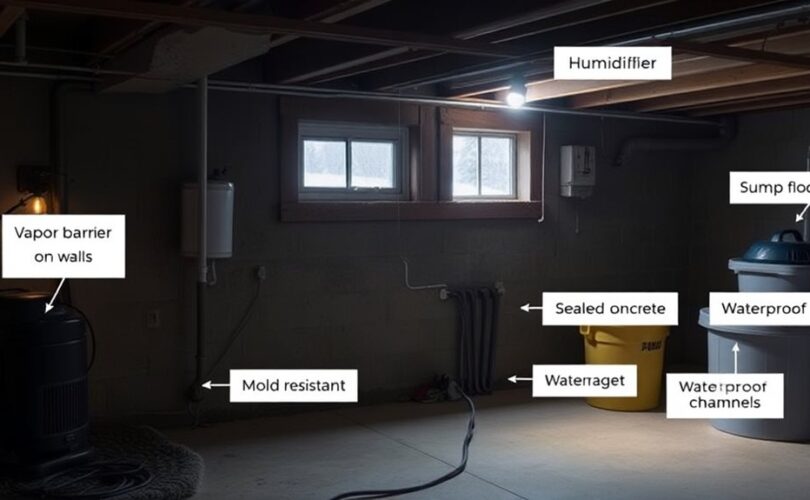
Minnesota basements require seven moisture-proofing solutions before finishing: professional moisture assessment to identify water entry points, exterior foundation waterproofing systems, interior drainage with reliable sump pumps, appropriate vapor barriers, climate control technology for year-round humidity management, water-resistant flooring materials designed for below-grade installation, and thorough mold prevention strategies. These solutions protect finishing investments while creating healthy living spaces that withstand freeze-thaw cycles, spring flooding, and summer humidity. The following extensive approach guarantees your basement remains dry and comfortable for decades.
Expert Highlights
- Install professional interior perimeter drainage systems with sump pump backup to manage Minnesota’s heavy precipitation.
- Apply exterior foundation waterproofing membranes to create a barrier against groundwater intrusion and seasonal freeze-thaw cycles.
- Implement vapor barriers and specialized wall systems instead of traditional fiberglass insulation which traps moisture.
- Install smart dehumidification systems to maintain 40-50% humidity levels across Minnesota’s extreme seasonal changes.
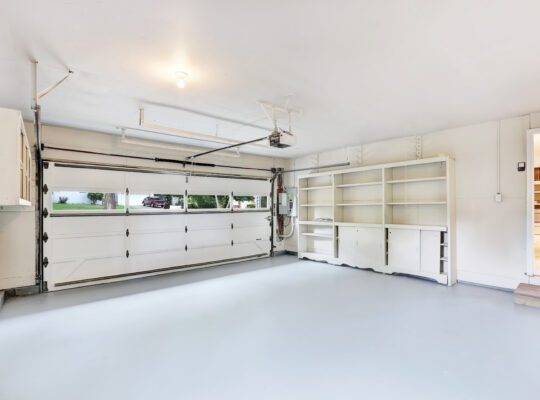
- Choose water-resistant flooring options like vinyl plank or epoxy coating that withstand basement moisture conditions.
Professional Moisture Testing and Assessment
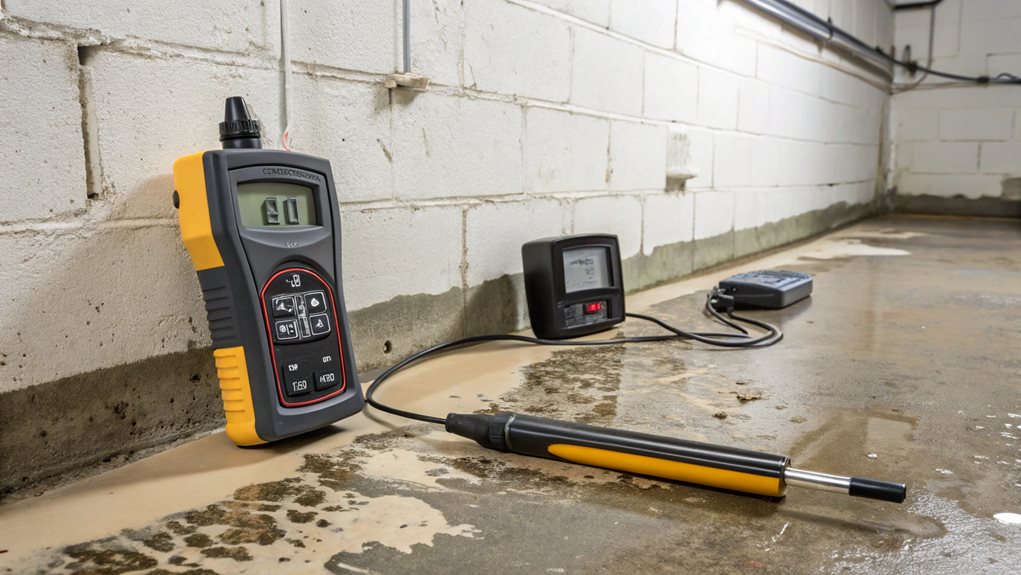
Before any effective moisture-proofing solution can be implemented in Minnesota basements, professional moisture testing and assessment must establish the foundation of the remediation plan. Experienced technicians utilize specialized equipment such as moisture meters, hygrometers, and thermal imaging cameras to identify both obvious and hidden water intrusion sources that homeowners typically miss.
These thorough assessments measure relative humidity levels, detect moisture within wall cavities, and identify potential condensation points specific to Minnesota’s extreme seasonal temperature fluctuations. Many Minnesota families are surprised to learn that what appeared to be minor dampness actually indicates significant hydrostatic pressure against foundation walls. The detailed evaluation pinpoints whether the moisture originates from seepage through concrete, condensation from improper ventilation, or groundwater intrusion—each requiring different remediation strategies. This scientific approach prevents costly mistakes and guarantees solutions address the specific moisture challenges in your basement.
Exterior Foundation Waterproofing and Drainage Systems
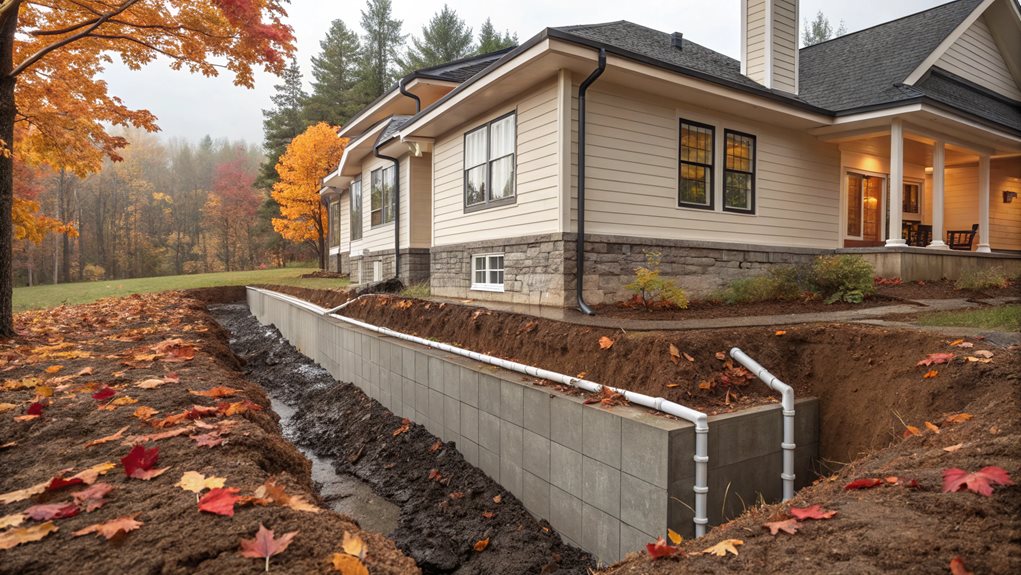
Once professional moisture testing has identified the specific water challenges affecting a Minnesota basement, addressing these issues at their source often requires exterior foundation waterproofing and drainage systems. These protective measures create a barrier between groundwater and foundation walls, effectively preventing moisture infiltration before it becomes an interior problem.
| System Component | Function | Typical Lifespan |
|---|---|---|
| Exterior Membrane | Creates waterproof barrier | 15-20 years |
| French Drain | Collects/redirects water | 10-15 years |
| Gravel Backfill | Facilitates drainage | 20+ years |
| Sump Pump | Removes collected water | 7-10 years |
| Downspout Extensions | Directs rainwater away | 5-8 years |
Minnesota’s freeze-thaw cycles can severely compromise foundation integrity, causing cracks that allow moisture entry. Installing these systems during initial construction is ideal, but retrofit solutions remain effective, albeit more costly. Proper exterior waterproofing serves as the first defense against basement moisture issues.
Interior Perimeter Drainage and Sump Pump Installation

Interior basement drainage systems require careful planning to manage water flow effectively, with options ranging from French drains to thorough channeling networks that direct moisture toward a central collection point. When selecting sump pump equipment, homeowners must consider factors such as horsepower requirements, backup systems for power outages, and alarm capabilities that provide notification before flooding occurs. While professional installation guarantees proper placement and connection to existing drainage systems, experienced DIY homeowners can tackle simpler systems with proper preparation, though mistakes in either approach can lead to costly water damage and foundation issues.
Water Flow Management Systems
When groundwater consistently threatens a Minnesota basement’s integrity, effective water flow management systems become essential for long-term moisture control. These integrated solutions direct water away from foundation walls and prevent hydrostatic pressure buildup that leads to seepage and flooding.
A thorough system typically includes sloped drainage channels installed along basement perimeter walls, connected to a sump basin. These channels intercept water before it reaches finished areas, while specialized membranes direct moisture into the drainage pathway. The collected water flows to a sump pump that automatically activates when water reaches predetermined levels, expelling it safely away from the foundation through discharge pipes.
For Minnesota homeowners, battery backup systems are particularly valuable during power outages caused by severe storms—precisely when water intrusion risks are highest. Professional installation guarantees proper pitch, connections, and discharge compliance with local codes.
Equipment Selection Considerations
Selecting appropriate equipment for basement waterproofing represents a critical investment decision that Minnesota homeowners shouldn’t take lightly. Interior drainage systems must withstand our freeze-thaw cycles and handle spring melt volumes, making heavy-duty PVC drainage channels superior to lightweight alternatives that crack under pressure. When evaluating sump pumps, cast iron models outperform plastic units by dissipating heat more efficiently during continuous operation—a must during severe weather events.
Many local basements require dual-pump systems with battery backups, particularly in neighborhoods with unreliable power during storms. Homeowners should consider pumps with capacity ratings exceeding 3,500 gallons per hour for Minnesota’s intense rainfall patterns. Water sensors and remote monitoring capabilities provide additional protection, alerting residents to potential failures before water damage occurs—a small upgrade that prevents thousands in potential repair costs.
Professional Vs DIY Installation
The decision between professional installation and DIY approaches for basement waterproofing systems represents a significant crossroads for Minnesota homeowners facing moisture issues. Interior perimeter drainage and sump pump installation involve complex considerations that impact long-term effectiveness and home protection.
DIY installations may save initial costs but often lack the precision of professional work. Homeowners attempting self-installation frequently encounter challenges with proper trenching depths, drainage slope calculations, and seamless connections to sump basins. Professional contractors bring specialized equipment, regional expertise with Minnesota’s unique soil conditions, and warranty protection unavailable to DIY projects.
Most successful Minnesota basement waterproofing projects utilize professionals for the critical drainage installation while homeowners handle simpler tasks like wall preparation or dehumidifier setup, creating a cost-effective hybrid approach that guarantees both quality and budget control.
Vapor Barriers and Proper Wall System Selection
Proper installation of vapor barriers represents a critical decision point for Minnesota homeowners facing the region’s extreme temperature fluctuations and moisture challenges. Without appropriate moisture control, basement walls can develop mold, mildew, and structural damage that compromise indoor air quality and property value.
When selecting a wall system, homeowners should prioritize products specifically engineered for basement environments. Traditional fiberglass insulation with plastic sheeting often fails in our climate, as moisture becomes trapped between the barrier and foundation wall. Instead, specialized systems like foam board insulation combined with dimpled membranes create both thermal protection and drainage pathways. These systems allow walls to breathe while preventing vapor transfer into living spaces.
The investment in proper materials pays dividends through energy savings, prevention of costly water damage, and creation of truly comfortable basement living spaces that stand the test of Minnesota’s challenging conditions.
Dehumidification and Climate Control Solutions
In Minnesota’s challenging climate, maintaining proper basement humidity levels requires a thorough, year-round approach. Modern smart climate control systems can automatically adjust dehumidification settings based on seasonal changes, preventing the excessive moisture that leads to mold growth in summer and the overly dry conditions that cause wood cracking in winter. Effective humidity management not only protects the structural integrity of basement spaces but also creates healthier living environments by preventing the microscopic allergens that thrive in improperly regulated basement atmospheres.
Year-Round Humidity Management
Because Minnesota’s climate fluctuates dramatically throughout the seasons, basement humidity levels require consistent monitoring and adjustment to prevent moisture-related damage. Winter heating systems can create excessively dry conditions, while summer brings high outdoor humidity that seeps into below-grade spaces. Many homeowners struggle with this seasonal pendulum, causing damage in both extremes.
Effective year-round management requires installing a programmable dehumidifier with humidity sensors in multiple locations. These systems automatically maintain ideal levels between 40-50% regardless of outdoor conditions. For thorough protection, consider whole-house humidification systems integrated with your HVAC equipment. These solutions adjust automatically when furnaces run during winter months, preventing the cracking of wood elements and foundation shifts that occur when basement air becomes too dry. The investment protects finished materials while creating healthier living conditions throughout the year.
Smart Climate Controls
Technology has revolutionized basement moisture control through smart climate systems that respond intelligently to Minnesota’s challenging conditions. These systems monitor humidity levels continuously, automatically adjusting to seasonal shifts that would otherwise require constant manual intervention.
Modern smart dehumidifiers connect to home automation networks, allowing homeowners to monitor basement conditions remotely through smartphone apps. When humidity spikes during summer months or spring thaws, these systems activate before moisture damage begins. Key features include programmable humidity targets, automatic drainage options, and energy-efficient operation modes that prevent the excessive utility costs associated with older models.
For best protection, experts recommend systems with temperature monitoring capabilities, as cold basement surfaces create condensation points. When integrated with proper ventilation controls, smart climate systems create balanced air circulation that prevents both excessive moisture and overly dry conditions.
Water-Resistant Flooring and Material Choices
When selecting materials for basement floors in Minnesota’s humid climate, homeowners must prioritize water resistance above all else. Traditional options like hardwood or carpet can quickly deteriorate when exposed to moisture, leading to mold growth and costly repairs. Instead, consider materials specifically engineered to withstand basement conditions while maintaining aesthetic appeal.
| Material Option | Moisture Resistance | Installation Complexity |
|---|---|---|
| Vinyl Plank | Excellent | Low |
| Ceramic Tile | Excellent | High |
| Epoxy Coating | Excellent | Medium |
| Engineered Wood | Moderate | Medium |
| Rubber Flooring | Excellent | Low |
Each material offers distinct advantages: vinyl plank provides the look of wood without susceptibility to warping; ceramic tile offers durability despite requiring professional installation; epoxy creates a seamless surface ideal for basements prone to minor seepage; engineered wood offers warmth with some moisture protection; and rubber flooring provides comfort underfoot with excellent water resistance.
Mold Prevention Strategies and Air Quality Considerations
Nearly every Minnesota basement faces the persistent threat of mold growth, creating both structural damage and potential health hazards for residents. The combination of humid summer air and seasonal temperature fluctuations creates perfect conditions for mold colonies to establish themselves in dark corners, behind walls, and under flooring.
Effective mold prevention requires a multi-faceted approach. Installing a quality dehumidifier that maintains humidity levels between 30-50% greatly reduces spore viability. Proper ventilation systems, including bathroom exhaust fans and air exchangers, help circulate fresh air while expelling moisture-laden air. Homeowners should also apply mold-resistant primers and paints containing antimicrobial properties before finishing walls. Regular inspections of potential problem areas—pipe connections, window wells, and foundation cracks—catch minor issues before they become major infestations, protecting both the home’s integrity and family health.
Frequently Asked Questions
How Long Does Basement Waterproofing Typically Last Before Needing Maintenance?
Professional basement waterproofing systems typically last 10-20 years before requiring maintenance, though longevity depends on installation quality, local soil conditions, and seasonal moisture fluctuations in one’s region.
Can I Finish Only Part of My Basement if Moisture Issues Exist?
Homeowners can finish part of their basement while moisture issues exist elsewhere, but addressing all water problems first is recommended to prevent mold and damage spreading to finished areas.
Will Homeowners Insurance Cover Moisture Damage in a Finished Basement?
Most homeowners insurance policies exclude coverage for moisture damage caused by poor maintenance or gradual seepage. Coverage typically applies only to sudden, accidental water events like burst pipes.
How Much Value Does a Waterproofed Finished Basement Add to My Home?
A waterproofed finished basement typically adds 70-75% of its cost to a home’s value. Homebuyers appreciate the peace of mind that comes with protected below-grade living space.
Can I DIY Waterproofing or Is Professional Installation Always Necessary?
Simple DIY waterproofing methods like sealing cracks and applying waterproof paint can work for minor issues. However, professional installation is recommended for serious moisture problems or full basement systems.
Expert Final Thoughts
Minnesota basements demand thorough moisture protection before finishing. By implementing these seven professional solutions—from foundation waterproofing to mold prevention strategies—homeowners create a durable, healthy living space that maintains its integrity for decades. The investment in proper moisture management prevents costly damage while ensuring comfort and value. With these systems in place, Minnesotans can confidently transform their basements into functional, worry-free extensions of their homes.