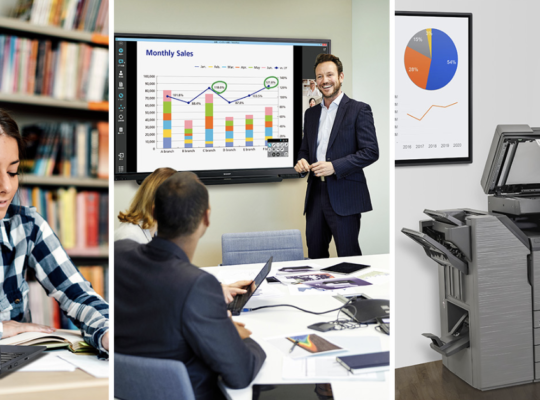
Renting a copier/multifunction printer offers significant advantages for many businesses. The arrangement requires lower upfront costs while bundling maintenance, support, and upgrades into predictable monthly payments. Organizations gain flexibility to scale equipment as needs change and avoid technology obsolescence without major capital expenditure. While ownership may cost less long-term for stable, high-volume users, rental agreements provide budget certainty and eliminate unexpected repair expenses. The ideal choice depends on your specific printing volume, growth trajectory, and financial priorities.
Expert Highlights
- Renting requires lower upfront costs and bundles maintenance, support, and repairs into predictable monthly payments.
- Rental agreements provide flexibility to upgrade equipment as technology advances or business needs change.
- Rented equipment qualifies as an operating expense for immediate tax deductions versus depreciation for purchased equipment.
- Maintenance and technical support included in rental agreements minimize disruptions and prevent unexpected repair costs.
- Short-term needs generally favor renting, while long-term stable usage might make purchasing more cost-effective.
Understanding the Financial Impact of Renting vs. Buying

When businesses face the decision between renting or purchasing a copier, they must carefully evaluate the immediate and long-term financial implications of each option. Renting typically requires lower upfront costs, preserving capital for other investments while offering predictable monthly expenses that simplify budgeting. Many organizations appreciate how rental agreements include maintenance and technical support, eliminating unexpected repair costs that ownership often entails.
Conversely, purchasing a copier represents a significant initial investment but potentially lower total cost over the equipment’s lifespan. Companies must consider depreciation, tax implications, and the opportunity cost of allocated funds. The break-even point—where ownership becomes more economical than renting—varies based on usage patterns, maintenance needs, and technological obsolescence rates. Businesses that regularly upgrade to newer models often find renting more advantageous than dealing with disposal and replacement cycles.
Hidden Costs of Ownership That Rental Agreements Avoid
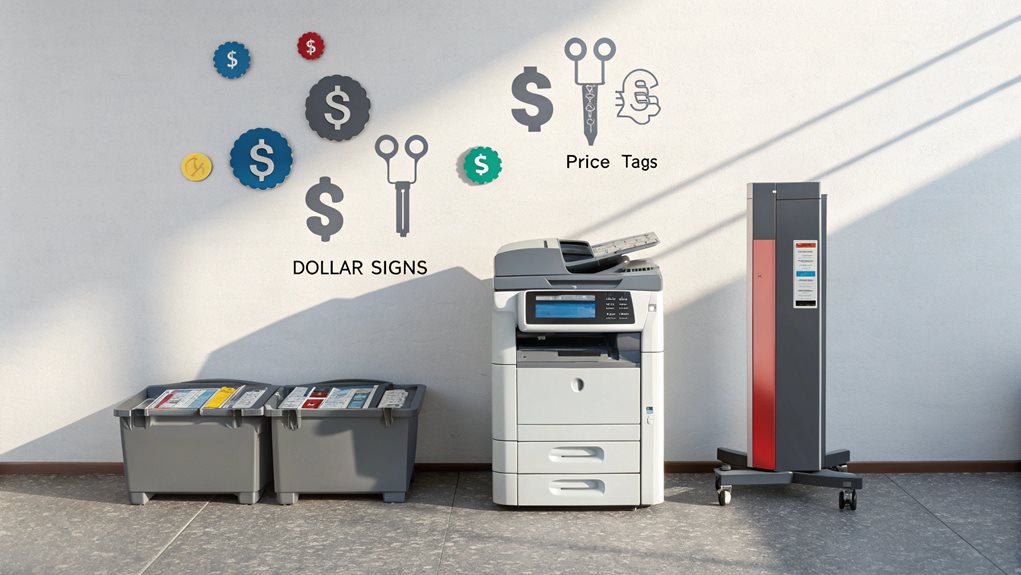
While the purchase price of a copier represents the most visible expense, it merely scratches the surface of the total financial commitment businesses face when choosing ownership over rental. Organizations often overlook costs like regular maintenance, parts replacement, software updates, and technical support that accumulate considerably over time. When toner runs low or components fail unexpectedly, owners bear the full financial burden of these repairs.
Rental agreements typically bundle these hidden expenses into one predictable monthly payment. Companies gain access to maintenance services, replacement parts, and technical support without additional costs. This thorough coverage eliminates budget surprises when malfunctions occur and prevents the operational disruptions that plague copier owners. The rental model transforms unpredictable, potentially large expenses into manageable fixed costs, allowing businesses to allocate resources more effectively and maintain consistent cash flow.
Flexibility and Scalability Benefits for Growing Businesses

As businesses evolve and expand, their document management needs undergo significant transformations that purchased equipment often cannot accommodate. Growing companies face the challenge of predicting future printing requirements while avoiding costly equipment that may become inadequate within a year or two.
Copier rental agreements offer the perfect solution by providing flexibility to upgrade or downgrade equipment as organizational needs change. When a company experiences sudden growth, rental contracts typically allow for exchanging smaller units for more robust models with additional features such as higher printing volumes, advanced finishing options, or enhanced security protocols. Similarly, if a business needs to downsize or relocate, rental agreements permit scaling back without the burden of selling owned equipment at a significant loss. This adaptability guarantees businesses maintain peak operational efficiency while managing cash flow effectively throughout various growth stages.
Maintenance and Technical Support Advantages
One significant advantage of renting a copier is access to thorough maintenance and technical support services without additional costs. When technical issues arise, rental agreements typically include on-demand repair services that minimize business disruptions and eliminate the need for in-house troubleshooting expertise. These worry-free technical assistance provisions guarantee businesses can focus on their core operations while equipment problems are promptly addressed by qualified technicians who understand the specific copier models.
Worry-Free Technical Assistance
A copier’s maintenance requirements can quickly become a business owner’s most frustrating headache without proper technical support. Rental agreements typically include extensive technical assistance, eliminating the burden of troubleshooting complex issues independently. This coverage often extends beyond basic repairs to include regular maintenance and emergency service.
| Support Feature | Ownership Challenge | Rental Solution |
|---|---|---|
| Response Time | Unpredictable vendor delays | Guaranteed response windows |
| Parts Replacement | Additional costs | Included in contract |
| Software Updates | Manual tracking | Automatic implementation |
| Technician Expertise | Limited to available staff | Certified specialists |
| After-Hours Support | Rarely available | Often included in premium plans |
When businesses rent copiers, they join a community of supported clients who receive priority attention. Companies can redirect the time and resources previously spent on maintenance toward core business functions, improving overall operational efficiency while reducing technical frustration.
On-Demand Repair Services
Nearly every business has experienced the frustration of equipment failure at a critical moment, and copier breakdowns often occur during peak document production periods. When teams are rushing to prepare client presentations or compile quarterly reports, a malfunctioning copier can halt productivity completely, potentially costing thousands in lost time and missed deadlines.
Rental agreements typically include responsive on-demand repair services, eliminating this concern. Rather than scrambling to find a qualified technician or waiting days for service appointments, rental clients simply contact their provider for prompt assistance. Most vendors guarantee response times of 4-24 hours, with many offering same-day service for critical issues. Additionally, these agreements often include all parts and labor costs, preventing unexpected repair expenses that can strain operational budgets. Companies gain peace of mind knowing expert technicians will quickly resolve any equipment issues.
Tax Implications and Budget Considerations
Financial decision-makers must weigh several tax implications when choosing between renting or purchasing a copier for their organization. Rented equipment typically qualifies as an operating expense, allowing businesses to deduct the full monthly payment immediately rather than depreciating the asset over time. This approach preserves capital and creates predictable monthly expenses that organizations can easily incorporate into departmental budgets.
In contrast, purchased equipment requires significant upfront investment and must be depreciated according to IRS guidelines—generally over a 5-year period for office equipment. While Section 179 deductions may allow for immediate write-offs up to certain limits, this benefit must be balanced against potential maintenance costs that increase as the equipment ages.
Teams that understand these distinctions can make financially sound decisions that align with their cash flow requirements and tax optimization strategies.
The Technology Obsolescence Factor
Office equipment technology advances at a remarkable pace, with new copier features and capabilities emerging every 12-18 months that can make today’s cutting-edge machine tomorrow’s outdated model. Renting a copier rather than purchasing outright allows businesses to upgrade to newer technology at the end of each contract term without being locked into obsolete hardware. This future-proofing strategy enables organizations to maintain competitive advantages through access to the latest scanning technologies, improved energy efficiency, and enhanced security features without significant capital expenditure.
Rapid Technology Evolution
As technology continues to advance at an unprecedented pace, businesses face the challenge of equipment becoming outdated shortly after purchase. Multifunction devices that seemed cutting-edge just three years ago may now lack essential features like cloud connectivity, advanced security protocols, or mobile printing capabilities that have become industry standards.
Renting copiers provides organizations a practical solution to this technological dilemma. With rental agreements, companies can upgrade their equipment as newer models become available, typically every 2-3 years without incurring the substantial capital expense of purchasing new machines outright. This flexibility guarantees teams always have access to the latest productivity-enhancing features, security updates, and efficiency improvements. Organizations avoid being locked into aging technology while maintaining competitive advantage through current document management solutions that meet evolving business demands.
Future-Proofing Your Investment
How quickly can today’s cutting-edge copier technology become tomorrow’s outdated burden? In the rapidly evolving office equipment landscape, businesses face the risk of being locked into outdated technology that diminishes productivity and increases costs. Rental agreements offer a strategic solution to this technology obsolescence challenge.
| Ownership Approach | Technology Obsolescence Risk |
|---|---|
| Purchasing | High – Stuck with aging equipment for 5-7 years |
| Renting | Low – Typically allows upgrades every 2-3 years |
| Leasing | Medium – Upgrade options at end of term only |
Assessing Your Business Printing Needs and Volume
Before any business can make an informed decision about renting a copier, understanding the organization’s printing requirements and volume becomes essential for selecting the right equipment. Companies often struggle to accurately estimate their monthly output, leading to costly overcapacity or frustrating bottlenecks that delay critical business operations.
To assess needs properly, organizations should track current usage patterns across departments for at least 30 days, noting both average and peak volume periods. This data collection reveals not just quantity but also document types—whether simple text pages or complex graphics requiring higher resolution. Additionally, businesses must evaluate specialized requirements like scanning capabilities, paper sizes, finishing options (stapling, hole-punching), and color versus black-and-white usage percentages. Armed with this thorough analysis, decision-makers can align rental agreements with actual operational demands, ensuring ideal performance without unnecessary expense.
Analyzing Rental Agreement Terms and What to Watch For
Once a business has accurately assessed its printing needs, maneuvering through the fine print of copier rental agreements becomes the next critical step in the decision-making process. These contracts often contain complex terms that can greatly impact costs and operational flexibility over time.
When reviewing rental agreements, businesses should carefully examine:
- Length of contract terms – watch for auto-renewal clauses that can lock you into extended commitments
- Maintenance coverage details – determine exactly what parts and service are included versus additional charges
- Overage fees structure – understand how costs escalate when exceeding monthly print allowances
- Termination conditions – identify potential penalties and notice requirements if business needs change
Understanding these critical elements helps organizations avoid unexpected expenses and guarantees the rental arrangement remains aligned with evolving business requirements, providing both financial predictability and operational peace of mind.
Case Studies: When Renting Made Financial Sense
Several small businesses have found copier rental arrangements financially advantageous during periods of rapid growth when capital preservation remains critical. A manufacturing startup in Colorado saved $15,000 by renting high-volume copiers during their expansion phase rather than purchasing equipment that would soon become inadequate for their scaling needs. Similarly, accounting firms and tax preparation businesses with pronounced seasonal workload fluctuations have reported 30% cost savings by renting additional copiers only during their three-month busy periods rather than maintaining excess capacity year-round.
Small Business Growth
Case studies across various industries reveal how renting copiers has catalyzed significant growth for small businesses facing resource constraints. Companies evolving from startup phase to established operations particularly benefit from the flexibility rental agreements provide, allowing them to scale technology alongside business expansion.
Four key growth advantages observed in successful small businesses include:
- Conservation of capital for revenue-generating activities rather than depreciating assets
- Ability to upgrade technology as client demands evolve without additional large investments
- Predictable monthly expenses that simplify budgeting during periods of rapid growth
- Access to enterprise-level features previously unavailable to smaller operations
When facing the difficult choice between purchasing and renting, growing businesses often find that copier rentals provide the technological flexibility needed during critical development phases without straining financial resources needed elsewhere in the business.
Seasonal Workflow Fluctuations
How do businesses effectively manage equipment needs when their document production demands fluctuate dramatically throughout the year? For companies with seasonal operations—like tax preparation firms, educational institutions, or holiday-focused retailers—investing in high-capacity copiers that sit idle for months creates unnecessary financial burden.
Renting copiers offers a practical solution for these fluctuating needs. A regional accounting firm saved over $7,200 annually by renting additional machines during tax season rather than purchasing equipment that would be underutilized the rest of the year. Similarly, a summer camp operation rents multifunction printers for their three-month peak season, avoiding maintenance costs during the off-season.
This flexible approach allows businesses to scale their document capabilities up or down as needed, paying only for equipment when it delivers value to operations.
Determining the Break-Even Point Between Purchasing and Renting
When deciding between purchasing or renting a copier, calculating the break-even point becomes essential for making a financially sound decision. This analysis helps organizations understand exactly when ownership becomes more economical than continued rental payments.
To calculate your break-even point effectively:
- Add up the total purchase cost, including initial equipment price, extended warranty, and estimated maintenance over the device’s lifetime
- Calculate the complete rental costs over the same timeframe, including monthly payments and any additional service fees
- Factor in tax considerations, as purchased equipment may qualify for depreciation benefits
- Consider the time value of money, as upfront purchasing requires more immediate capital outlay
Organizations typically find that short-term needs favor renting, while long-term usage scenarios often make purchasing more economical after the break-even point is reached.
Frequently Asked Questions
What Happens if We Damage the Rented Copier?
If a rented copier is damaged, the renter typically must pay for repairs or replacement according to terms outlined in the rental agreement’s liability clause.
Can We Customize the Copier With Our Own Software?
Customization options vary by rental agreement. Most providers allow software integration with their devices, but extensive modifications may require special permission or void warranty terms. Always consult the rental contract.
Are There Options to Buy the Copier After the Rental Period?
Yes, many rental agreements offer purchase options at the end of the term. These buyout clauses typically price the equipment at fair market value or a predetermined amount.
How Quickly Can Rental Equipment Be Replaced if Necessary?
Rental equipment can typically be replaced within 24-48 hours, depending on the provider’s service agreement terms. Most vendors prioritize business continuity for their loyal customers when equipment fails.
Do Rental Companies Provide Operator Training for Complex Machines?
Most reputable rental companies offer thorough operator training for complex machines, ensuring users understand all features and functionality. This training is typically included in the rental agreement’s service package.
Expert Final Thoughts
Whether renting a copier/multifunction printer makes sense depends on your specific business needs. Rental agreements offer predictable monthly costs, eliminate maintenance headaches, and provide flexibility to upgrade as technology evolves. For growing businesses with limited capital or changing print requirements, renting often proves financially advantageous. Carefully evaluate your printing volume, analyze all contract terms, and calculate your break-even point before making this significant operational decision.